Iroquois National Wildlife Refuge Bald Eagle Nest
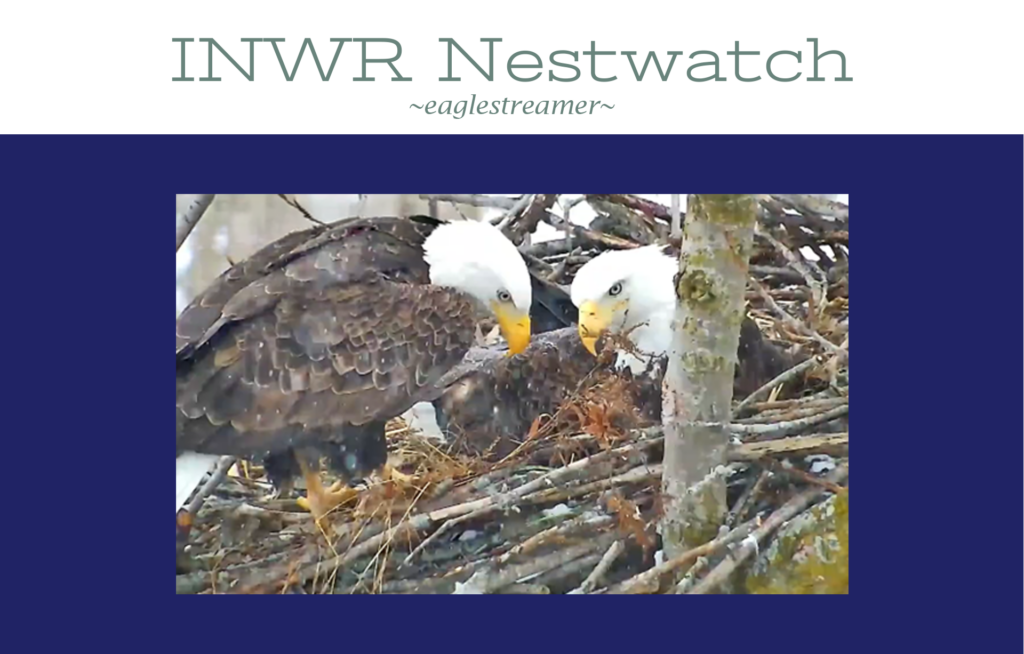
Seneca (M) & Cayuga (F) [image credit: Pixcams (with permission)]
INWR Hatchwatch Clock 2026
| INWR 1 | Egg: 2/20/26 17:06 Hatch: 4/1/26 (~noon) Passed: 4/6/26 15:30 * | 5 Days3 Hours🦅 |
| INWR 2 | Egg: 2/23/26 17:00 Hatch: 4/3/26 (~07:30) | |
| INWR 3 | Egg: 2/27/26 14:34 Pip: 4/7/26 18:37 Hatch: 4/7/26 23:59 Passed: 4/12/26 20:31 ** | 4 Days20 Hours🦅 |
*On 4/6/26 INWR1 was accidentally displaced just outside of the egg cup by an exiting adult at 9:59. Despite long effort by INWR1 to find a way over obstructing materials & back into the egg cup under brood, the eaglet was unable to do so and passed away at approximately 15:30 from the prolonged exposure.
**On the evening of 4/12/26 INWR3 was accidentally displaced just outside of the egg cup when the adult shifted position as the eaglet was moving over the adult’s foot. At just under 5 days of age with both limited mobility and vision too immature for the circumstances, INWR3 became directionally turned around. The eaglet, following the path of least resistance to the edge of the nest, was unable to reverse course, and fell from the nest.
When to begin watching for signs of a hatch at INWR 2026? Estimated: 3/27, 3/30, 4/3
Before hatch: the Hatchwatch Clock counts UP from the time the egg is laid.
After hatch: the Hatchwatch Clock is reset to track the age of the offspring.
- Bald eagle embryo take 35 days to develop when incubated at 99 degrees.
- The range for hatching is 34-41 days; only rarely would an egg hatch outside of this range.
- Begin to watch for a ‘pip’ in the egg as day 35 approaches.
- First eggs may take a bit longer to hatch than later eggs as they sometimes are not intensely incubated until the arrival of the second egg, the brood patch may also be less well developed, and the initial incubation temperature may be slightly lower.